Mustang vs. Camaro Appraisal: Which Holds Value Better and Why It Matters
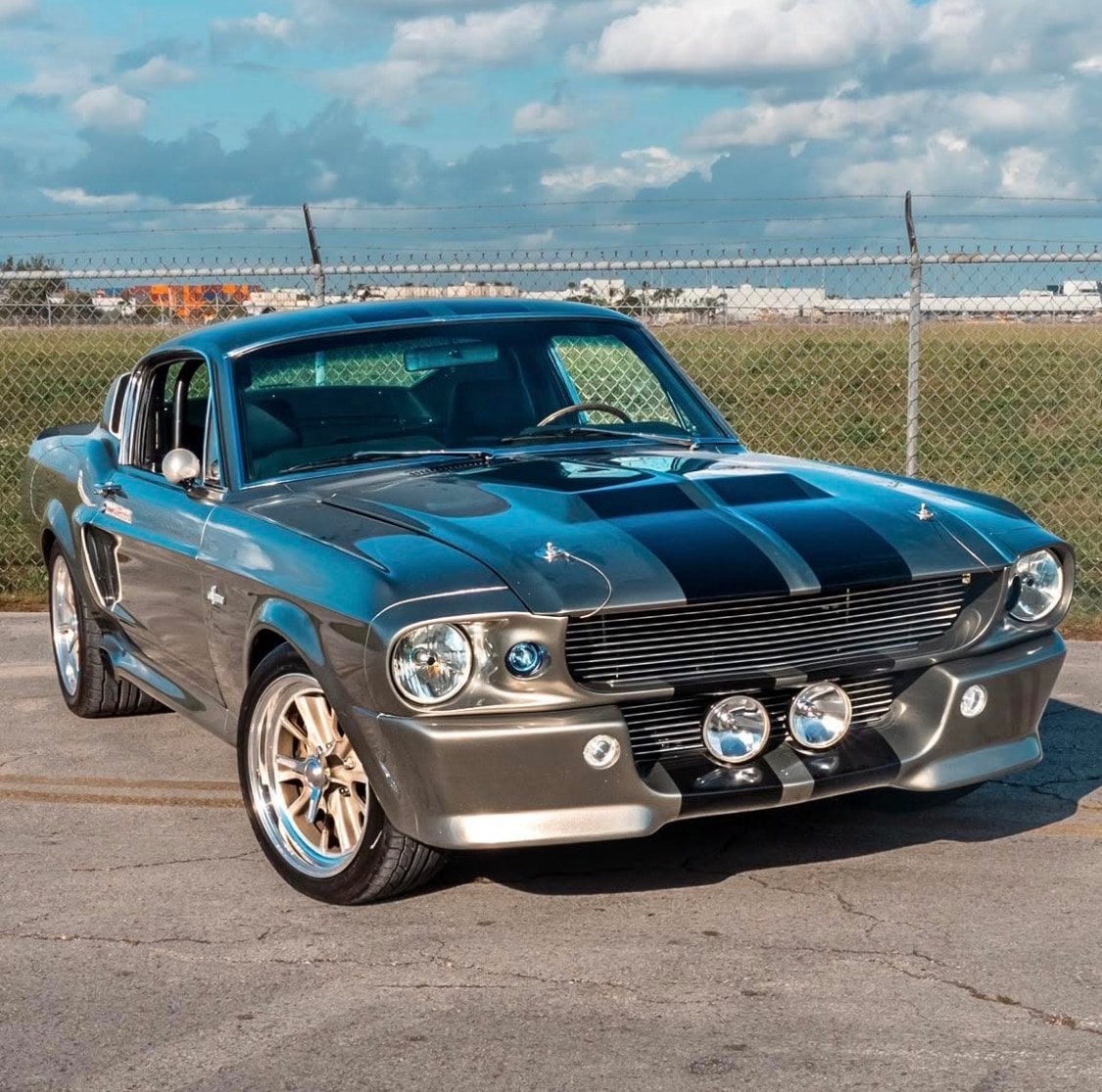
The two most-collected American muscle cars share a generation, a rivalry, and a collector market — but they appraise very differently. Here is exactly what drives value on each, where the gaps are, and what a certified appraiser looks for when both cars are on the table.

The Ford Mustang and Chevrolet Camaro have been compared since 1967. Drag strips, car shows, insurance forms, and estate attorneys have all had to answer the same question: which one is worth more, and why?
The honest answer is that it depends — on the year, the engine, the documentation, and the story the car can prove. Two cars that look identical at a show can appraise $40,000 apart. Understanding why requires understanding what appraisers actually measure on each platform.
This guide covers both cars in depth: what drives value, where the collector markets diverge, what documentation matters, and what a certified appraisal captures that a price guide never will.
The market context: two different collector ecosystems
The Mustang and Camaro share a generation and a rivalry, but they do not share a collector market. They have separate registries, separate clubs, separate authentication standards, and separate buyer pools. That matters for appraisal because value is ultimately set by what a willing buyer will pay — and the buyers for a numbers-matching 1969 Boss 429 are not the same buyers shopping for a numbers-matching 1969 Camaro ZL1.
Mustang market characteristics:
- Largest collector car registry in the United States by volume
- Deep comparable sales data going back decades
- Highly organized documentation standards (Marti Reports, broadcast sheets, window stickers)
- Strong clone and tribute car problem — misrepresentation is common
- Values spread extremely wide: a base six-cylinder coupe and a real Shelby GT500 are both "1967 Mustangs"
Camaro market characteristics:
- Smaller production numbers than Mustang in most years, which supports values
- Extremely well-documented factory options via Protect-O-Plate and trim tags
- First-generation (1967–1969) commands the strongest premiums; second-gen (1970–1981) is undervalued relative to quality
- Z/28 and COPO cars carry authentication requirements that are well-established
- Restoration quality matters more per dollar than on Mustangs because the buyer pool is more sophisticated
Neither market is better or worse — they are different. An appraiser who understands both can tell you exactly where your car sits in its own ecosystem, not just against the other brand.
Year-by-year value comparison: where the markets diverge
1964½–1966 Mustang vs. no Camaro equivalent
The Camaro did not exist until 1967. The earliest Mustangs — the 1964½ and 1965 models — have no direct Camaro competitor. This gives early Mustangs a unique position: they are the founding generation of the pony car segment, and collectors pay for that history.
A 1965 Mustang fastback in excellent condition with a 289 Hi-Po (K-code) engine typically appraises in the $45,000–$75,000 range depending on documentation and options. A convertible in the same configuration can exceed $80,000. The 1964½ cars carry a modest premium for being first.
There is no Camaro equivalent. If you are comparing early-generation pony cars, the Mustang wins by default for 1964–1966.
1967–1969: the heart of the rivalry
This is where the comparison gets serious. Both cars were at their peak, both offered big-block options, and both produced limited-production performance variants that now command six-figure values.
1967–1968 Mustang vs. 1967–1968 Camaro:
The 1967–1968 Mustang is a larger, heavier car than the first-gen Camaro. The Camaro's tighter, sportier platform appeals to a different buyer. In comparable condition with comparable engines, first-gen Camaros often appraise slightly higher than equivalent Mustangs because of lower production numbers and a more focused collector base.
A 1967 Camaro SS/RS with a 396 in excellent documented condition: $55,000–$80,000. A 1967 Mustang fastback with a 390 GT in equivalent condition: $45,000–$70,000.
The gap is not dramatic, but it is consistent. Camaro buyers tend to pay more per unit of rarity.
1969: the peak year for both
The 1969 model year produced the most valuable variants of both cars. For Mustang: the Boss 429, Boss 302, and Mach 1 with the 428 Cobra Jet. For Camaro: the ZL1, COPO 9560 (L72 427), and Z/28.
At the top of the market, the Camaro wins decisively. A documented 1969 Camaro ZL1 — only 69 were built — is one of the most valuable American muscle cars in existence, with values exceeding $500,000 for the best examples. The 1969 Boss 429 Mustang is exceptional, but it was produced in much larger numbers (859 units) and typically appraises in the $120,000–$200,000 range.
Below the ultra-rare variants, the gap narrows. A 1969 Camaro Z/28 and a 1969 Boss 302 Mustang are comparable in both rarity and collector appeal. Both typically appraise in the $60,000–$100,000 range for well-documented, numbers-matching examples.
1970–1973: Mustang stumbles, Camaro holds
The 1970–1973 period is where the two cars diverge most sharply in collector perception. The 1971–1973 Mustang grew significantly in size and weight, and the market has never fully embraced these cars the way it has the 1964–1970 generation. A 1971 Mustang Mach 1 with a 429 Cobra Jet is a legitimate performance car, but it appraises well below an equivalent 1969 model.
The second-generation Camaro (1970½–1981) is a different story. The 1970–1972 Camaros are widely considered among the best-looking American cars ever built, and collector interest has grown steadily. A 1970 Camaro Z/28 with the LT1 350 in excellent documented condition regularly appraises in the $55,000–$85,000 range — competitive with first-gen values.
For 1970–1973, the Camaro holds value better than the Mustang.
What appraisers look for: Mustang-specific factors
The Marti Report
For any 1967–1973 Mustang, the Marti Report is the single most important document in the appraisal file. Produced by Marti Auto Works from original Ford production records, it confirms every factory option, the production sequence, the dealer destination, and the original color. A Mustang without a Marti Report is not necessarily misrepresented — but an appraiser cannot confirm factory authenticity without one.
The Marti Report matters most for:
- Confirming high-value option codes (K-code, R-code, J-code engines)
- Verifying Shelby, Boss, and Mach 1 designations
- Distinguishing factory-built cars from dealer-installed or owner-added options
- Establishing rarity within a model year
A Mustang with a clean Marti Report confirming rare options appraises significantly higher than an identical-appearing car without one.
VIN decoding and cowl tag verification
Every Mustang carries a VIN that encodes the model year, assembly plant, body style, engine, and production sequence. The cowl tag (data plate) on the firewall confirms the body color, interior, and build date. An appraiser cross-references the VIN against the cowl tag, the engine stamp, and the Marti Report to establish whether the car is numbers-matching.
For high-value Mustangs, the engine stamp is critical. The engine block carries a partial VIN stamp that ties it to the original vehicle. A Boss 429 or Shelby GT500 with the original engine block commands a substantial premium over an equivalent car with a replacement engine — even if the replacement is the correct type.
Shelby authentication
Shelby Mustangs require additional authentication beyond the standard Marti Report. The Shelby American Automobile Club (SAAC) maintains registry records for all Shelby GT350 and GT500 models. A Shelby without SAAC registry documentation is a significant appraisal risk — the clone problem is severe in this segment.
An appraiser evaluating a Shelby will verify:
- SAAC registry number
- Shelby-specific VIN format (different from standard Mustang VINs)
- Shelby-specific body modifications (fiberglass hood, side scoops, rear quarter windows on fastbacks)
- Shelby-specific interior and instrumentation
- Carryover components from the base Mustang that should be present
A real Shelby GT500 KR and a well-built clone can look identical to a casual observer. The appraisal difference is $80,000 or more.
What appraisers look for: Camaro-specific factors
The trim tag and Protect-O-Plate
The Camaro's equivalent of the Mustang's cowl tag is the trim tag, located on the firewall. It encodes the body color, interior color, build date, and trim level. For 1967–1969 Camaros, the Protect-O-Plate — a metal card issued with the car for warranty purposes — is the most important authentication document. It confirms the original engine, transmission, and dealer.
A 1969 Camaro with its original Protect-O-Plate is significantly more valuable than an equivalent car without one. For COPO and Z/28 cars, the Protect-O-Plate is often the only surviving factory document that confirms the high-performance configuration.
COPO authentication
COPO (Central Office Production Order) Camaros are among the most valuable American muscle cars. The 1969 COPO 9560 (L72 427) and COPO 9561 (ZL1 aluminum 427) were ordered through a dealer loophole to bypass GM's displacement restrictions. Only 1,015 COPO 9560 cars and 69 ZL1 cars were built.
Authenticating a COPO requires:
- VIN confirmation (COPO cars carry standard Camaro VINs — the COPO designation is not in the VIN)
- Protect-O-Plate confirming the L72 or ZL1 engine
- Trim tag cross-reference
- Engine stamp verification (the L72 and ZL1 blocks carry specific casting numbers)
- Cowl tag and body documentation
A claimed COPO without Protect-O-Plate documentation is an appraisal red flag. The value difference between a confirmed COPO and a non-COPO 396 SS is $80,000–$400,000 depending on the specific variant.
Z/28 verification
The Z/28 is the most commonly misrepresented Camaro. The Z/28 package was a Regular Production Option (RPO), not a separate model, which means any Camaro could theoretically be converted to Z/28 appearance. Appraisers verify Z/28 authenticity through:
- Trim tag RPO codes (Z28 must appear on the tag)
- Engine casting numbers (the DZ 302 has specific casting numbers)
- Transmission codes (the Muncie close-ratio four-speed was standard)
- Cowl tag build date (Z/28 production began mid-year in 1967)
- Protect-O-Plate confirmation
A real Z/28 and a well-built tribute car can look identical. The appraisal difference is $25,000–$50,000.
Condition grading: where both cars are judged the same way
Regardless of brand, certified appraisers use a standardized condition scale. The most common is the 1–6 scale used by major auction houses and insurance carriers:
Condition 1 — Show car: Restored to the highest possible standard, winning or capable of winning national shows. Rarely driven. Represents the top 1% of surviving examples.
Condition 2 — Excellent: Professionally restored or an exceptional original. Minor imperfections only visible on close inspection. Drives and shows beautifully.
Condition 3 — Good: Completely operable original or older restoration showing wear. A good driver. Presentable at local shows.
Condition 4 — Fair: Needs cosmetic work but is mechanically sound. Older restoration with significant wear. Driveable but not show-ready.
Condition 5 — Restorable: Needs complete restoration. All major components present. Not currently driveable.
Condition 6 — Parts car: Deteriorated to the point where restoration is not economically viable.
The condition grade has a larger impact on appraised value than most owners expect. A Condition 2 car can appraise at 150–200% of a Condition 3 car with identical specifications. On a $60,000 Z/28, that difference is $30,000.
The documentation hierarchy: what moves the needle most
For both Mustangs and Camaros, documentation follows a clear hierarchy of value impact:
Tier 1 — Factory authentication documents:
- Mustang: Marti Report, window sticker, broadcast sheet
- Camaro: Protect-O-Plate, trim tag, window sticker
These documents confirm what the factory built. Their presence can add 20–40% to appraised value over an undocumented car.
Tier 2 — Ownership history:
- Title chain showing continuous ownership
- Original dealer invoice
- Original owner's manual and warranty booklet
- Service records from the original era
A one-owner car with a complete title chain and original paperwork commands a premium in both markets. Buyers pay for provenance.
Tier 3 — Restoration documentation:
- Receipts for restoration work
- Before/during/after photographs
- Parts invoices showing correct NOS or date-coded components
- Shop records from known restoration specialists
For a restored car, documentation of the restoration process is nearly as important as the restoration quality itself. An appraiser cannot verify what they cannot see — photographs and receipts make the invisible visible.
Tier 4 — Awards and show history:
- AACA, NCRS, or Concours judging sheets
- Show awards and plaques
- Magazine features or auction appearances
Show history adds credibility and sometimes adds value, but it is the weakest tier. Awards confirm appearance at a point in time, not current condition or authenticity.
Insurance appraisal: why agreed value matters for both cars
Both Mustangs and Camaros are routinely underinsured. Standard auto insurance pays actual cash value — what the car is worth on the open market at the time of a claim. For a collector car that has appreciated significantly, actual cash value is almost always less than what the owner paid or what the car would bring at auction.
Agreed value insurance — also called stated value with no depreciation — pays the full insured amount in the event of a total loss, without depreciation. To qualify for agreed value coverage with most specialty insurers (Hagerty, Grundy, American Collectors), the car must be appraised by a certified appraiser.
The appraisal establishes the agreed value. If your 1969 Camaro Z/28 appraises at $85,000, that is what the policy pays. Without an appraisal, the insurer sets the value — and they will not set it at $85,000.
For Mustangs and Camaros specifically, the spread between book value and actual market value can be enormous. A 1969 Boss 429 Mustang that Hagerty's Price Guide lists at $120,000 might appraise at $165,000 based on its specific documentation, condition, and options. The appraisal captures what the price guide cannot.
Get an agreed value appraisal for your Mustang or Camaro →
Estate and divorce appraisal: when the cars have to be valued fairly
Muscle cars appear frequently in estate and divorce proceedings. When a 1969 Camaro Z/28 is part of a marital estate, both parties need an independent, defensible value. When a collection of Mustangs passes through probate, the estate needs certified values for tax purposes.
In both contexts, a certified appraisal prepared in substantial conformity with USPAP is the standard. The appraisal must be defensible — meaning an appraiser must be able to explain and support every value conclusion under examination.
For estate purposes, the IRS requires qualified appraisals for donated or inherited property valued above certain thresholds. A certified appraisal from an ASCAA-credentialed appraiser satisfies this requirement.
For divorce proceedings, the appraisal may be submitted as evidence. An appraiser who is also qualified as an expert witness can provide deposition testimony if the value is contested.
Learn about estate and legal appraisals →
Pre-purchase inspection: buying a Mustang or Camaro sight-unseen
The collector car market has moved significantly online. A 1969 Camaro Z/28 listed on Bring a Trailer or Cars & Bids may be located 1,500 miles from the buyer. A pre-purchase inspection by a local certified appraiser protects the buyer before money changes hands.
A pre-purchase inspection covers:
- Condition assessment against the seller's claims
- VIN verification and documentation review
- Mechanical inspection (engine, transmission, brakes, suspension)
- Body and paint inspection (filler, rust, accident damage)
- Undercarriage inspection
- Authentication verification for high-value variants
For a $60,000 Camaro, a $349 pre-purchase inspection is the cheapest insurance available. It either confirms the car is what the seller claims, or it identifies problems that justify renegotiation or walking away.
Learn about pre-purchase inspections →
Frequently asked questions
Does a Mustang or Camaro hold value better long-term?
Both have appreciated significantly over the past 20 years, and both are expected to continue appreciating as the Baby Boomer collector base matures and the supply of unrestored originals shrinks. At the top of the market, rare Camaros (ZL1, COPO) have outperformed equivalent Mustangs. In the middle of the market, values are comparable. The best investment in either brand is a well-documented, numbers-matching car in the highest-performance configuration you can afford.
What is the most valuable Mustang?
Among production Mustangs, the 1969 Boss 429 and the 1967–1968 Shelby GT500 are consistently the most valuable. The 1965 Shelby GT350R (competition model) is rarer and can exceed $500,000 for the best examples. Among all Mustangs including prototypes and one-offs, values are significantly higher.
What is the most valuable Camaro?
The 1969 Camaro ZL1 is the most valuable production Camaro. With only 69 built and an all-aluminum 427 engine, documented ZL1s have sold for $500,000–$1,000,000 at major auctions. The COPO 9560 (iron-block L72 427) is the next tier, with values in the $150,000–$300,000 range for the best examples.
Can I get both cars appraised at the same time?
Yes. If you own both a Mustang and a Camaro — or are considering purchasing one of each — a single appraisal engagement can cover both vehicles. Contact us to discuss multi-vehicle appraisal pricing.
How long does a certified appraisal take?
An online appraisal based on photographs and documentation typically takes 24–48 hours after all materials are submitted. An in-person appraisal can usually be scheduled within one to two weeks depending on location.
Does the appraisal need to be updated?
Collector car values change with the market. For insurance purposes, most specialty insurers recommend updating agreed value appraisals every two to three years, or after significant restoration work. For a car that has appreciated substantially, an updated appraisal ensures you are not underinsured.
The bottom line: both cars deserve a certified appraisal
The Mustang vs. Camaro debate will never be settled at a car show. But for insurance, financing, estate, or sale purposes, the debate is irrelevant — what matters is what your specific car, with its specific documentation and condition, is worth in the current market.
A certified appraisal from an ASCAA-credentialed appraiser gives you that number. It is defensible, it is documented, and it is prepared in substantial conformity with USPAP. Whether you own a base six-cylinder Mustang or a numbers-matching Camaro ZL1, the appraisal process is the same: thorough, independent, and built on comparable sales data.
American Classic Appraisals has been appraising first-generation Mustangs and Camaros since 1993. We know what the documentation should look like, what the authentication red flags are, and what the current market will bear.
Start your appraisal online from $149 → · Call (270) 790-7534
Related guides: Mustang Appraisal Guide · Camaro Appraisal Guide · Classic Car Insurance Appraisal · What Makes a Classic Car Increase in Value
Explore Topics
Written by
Shawn Owens, ASCAA-CERT-4246
Content creator and writer sharing insights and stories.